Islamabad Regional Dialogue on SDG Implementation, Regional Cooperation & Investment 2026
Participant Countries
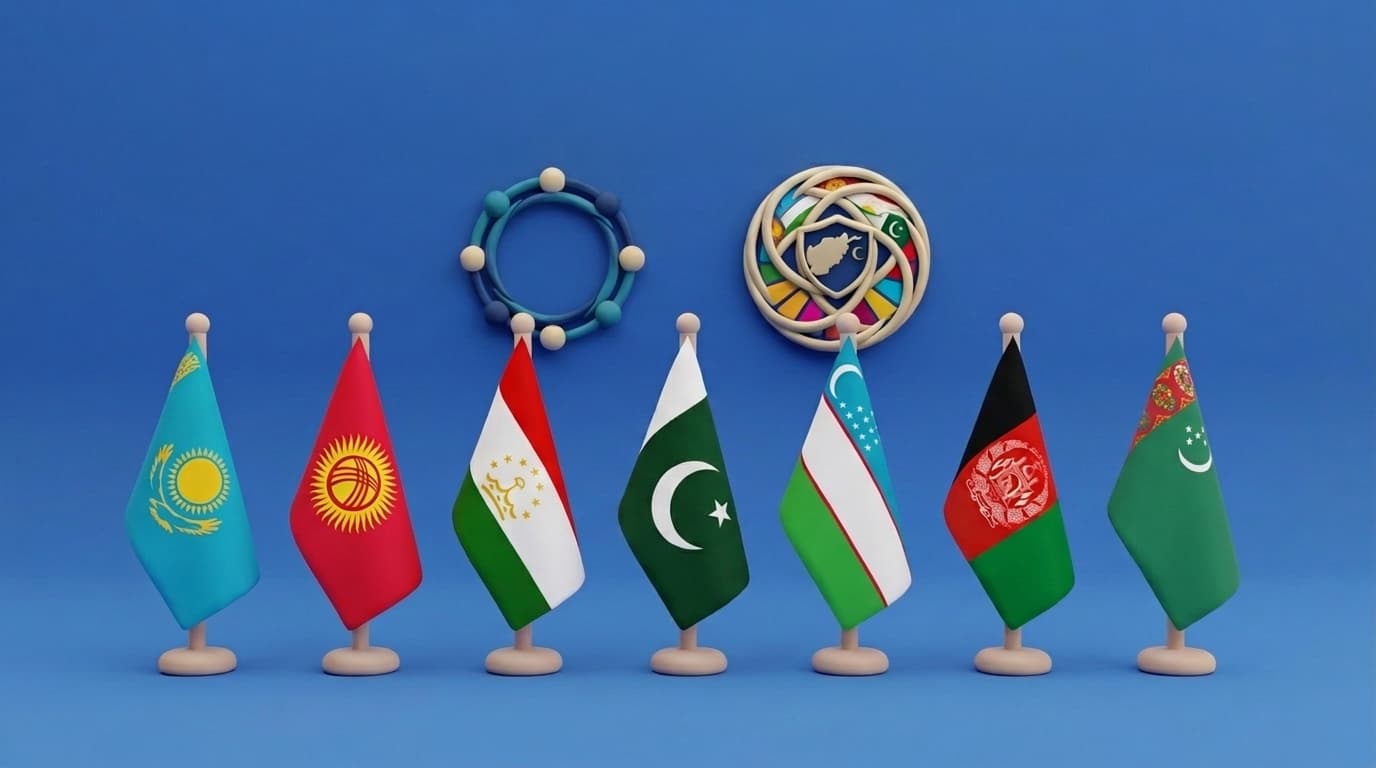
7 participating nations, one shared dialogue on sustainable development across Central and South Asia.
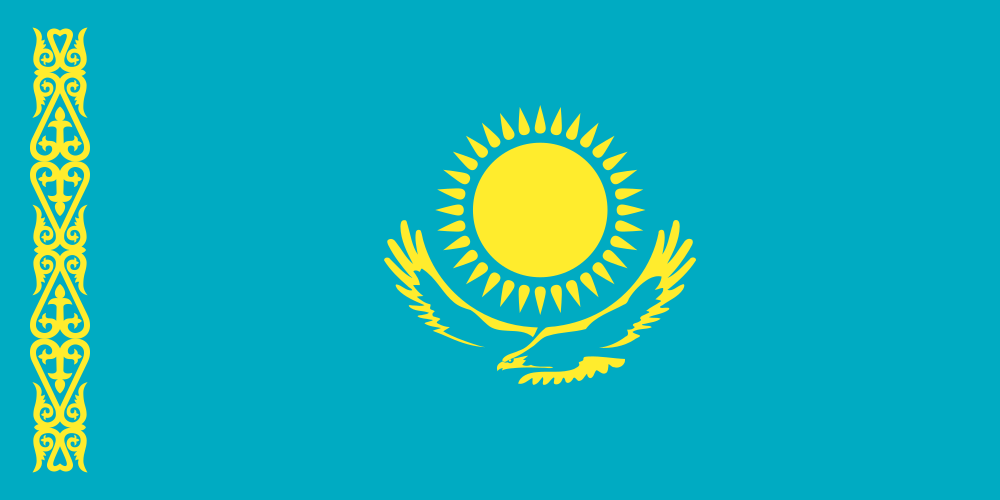 01KAZ
01KAZKazakhstan
Astana
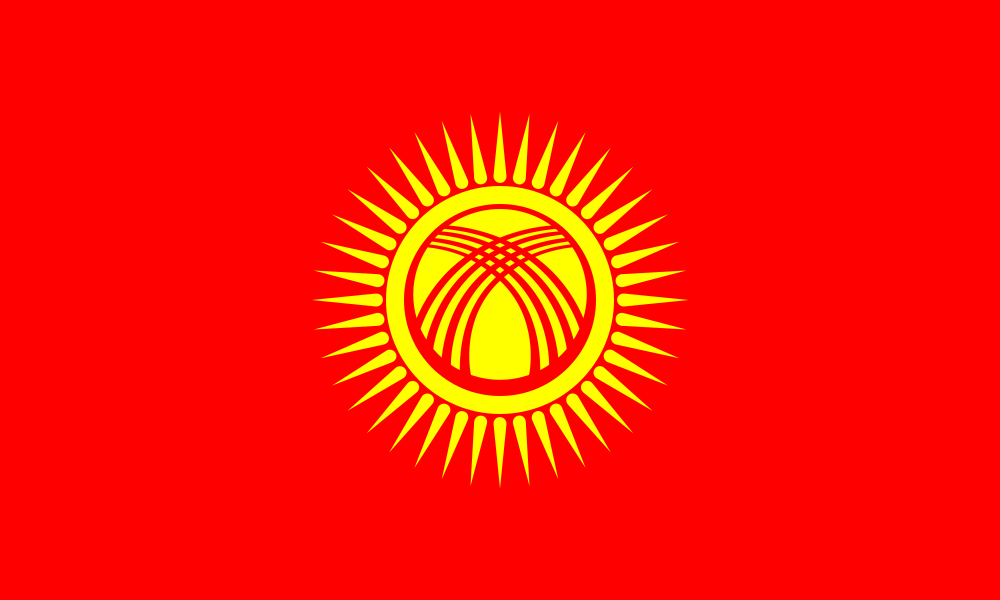 02KGZ
02KGZKyrgyzstan
Bishkek
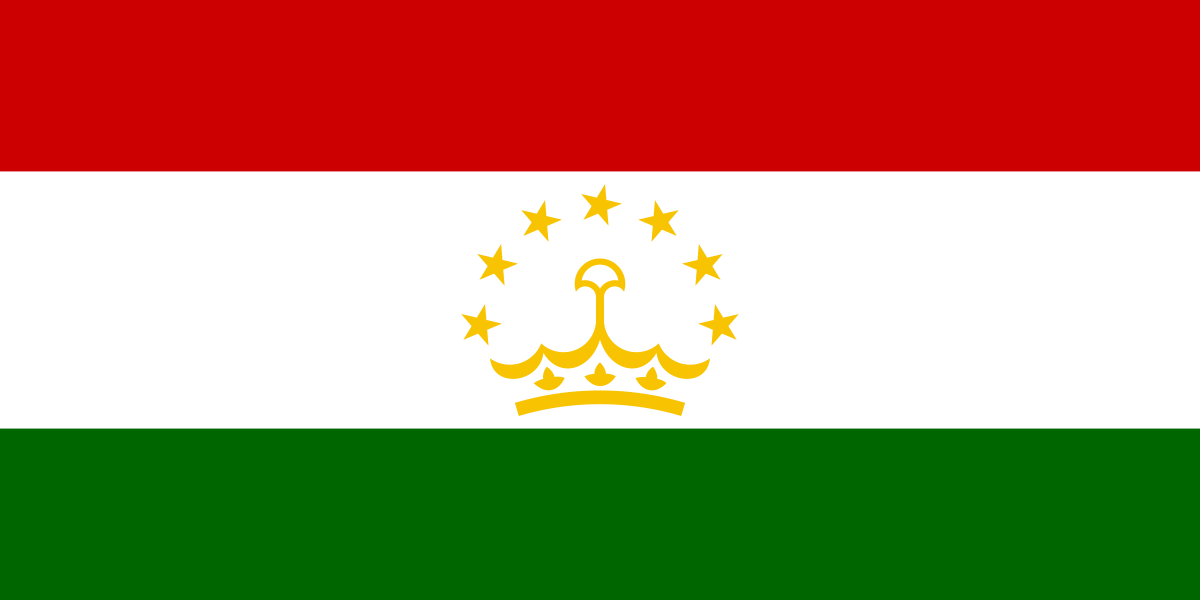 03TJK
03TJKTajikistan
Dushanbe
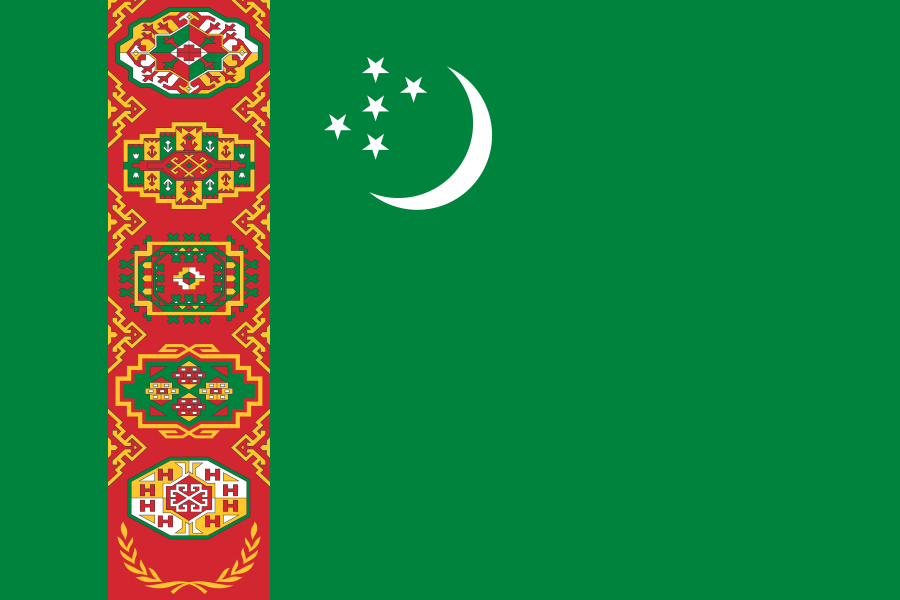 04TKM
04TKMTurkmenistan
Ashgabat
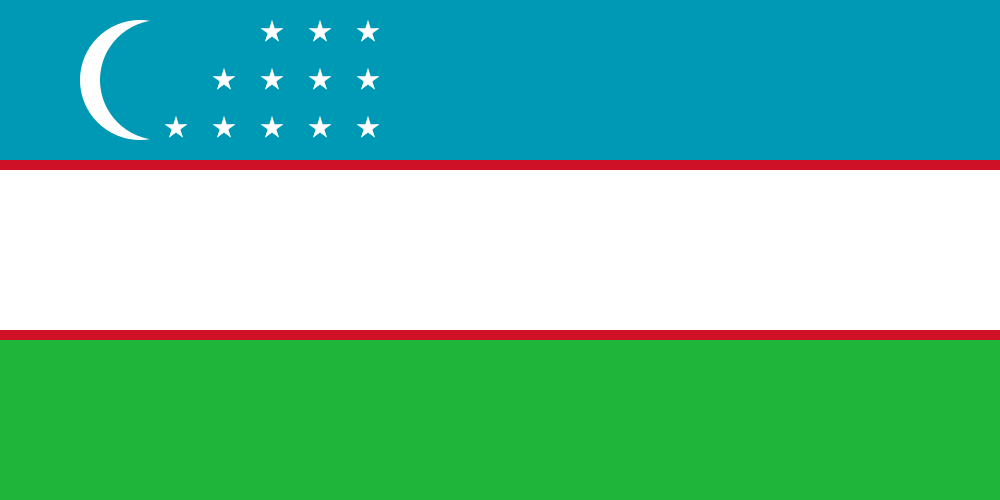 05UZB
05UZBUzbekistan
Tashkent
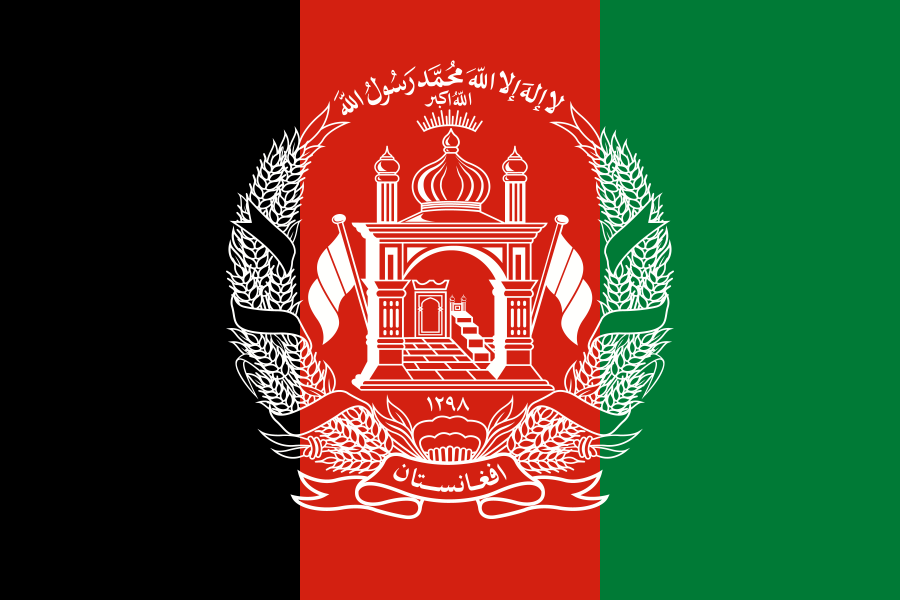 06AFG
06AFGAfghanistan
Kabul
 07PAK
07PAKPakistan
Islamabad (Host)
01KAZKazakhstan
Astana
02KGZKyrgyzstan
Bishkek
03TJKTajikistan
Dushanbe
04TKMTurkmenistan
Ashgabat
05UZBUzbekistan
Tashkent
06AFGAfghanistan
Kabul
07PAKPakistan
Islamabad (Host)
Pakistan, Central Asia & Afghanistan
Seven interconnected nations united through shared river basins, mountain cryospheres, historic trading routes and mutual SDG priorities.
- 07
- Nations · Interconnected, one shared dialogue
- 250M+
- People · Combined population across the region
- Oct 2026
- Islamabad · Regional Dialogue, host city
Pakistan
پاکستانCapital · Islamabad (Host)
Strategic regional role
Host Nation, Maritime Gateway to Arabian Sea, Climate Vulnerability & Youth Innovation Hub
Host of the foundational 2026 Dialogue in Islamabad. Offers warm-water port access (Gwadar, Karachi) to landlocked Central Asia, leading South-South cooperation and loss-and-damage climate advocacy.
- Maritime Access
- Karachi & Gwadar Ports
- Youth Demographics
- 64% under age 30
- Host City
- Islamabad (Oct 2026)
Key indicators
Priority SDG commitments
- 13Climate Resilience
- 14Oceans & Ports
- 08Youth Skills
- 17Regional Multilateralism
Why Islamabad? Connecting Central Asia with South Asia
Islamabad provides a strategic setting for bringing together Central Asian, Afghan and Pakistani stakeholders around a shared sustainable-development agenda. The Dialogue will use Islamabad as a platform to connect landlocked Central Asia with South Asian maritime ports, particularly through discussions on sustainable connectivity, trade, water, energy, food systems, youth, technology and investment.
Six Regional Priority Areas & Afghan Dialogue
Action-driven thematic panels addressing the region’s interconnected systemic challenges.
Water, Climate & Environmental Resilience
Transboundary water security, mountain & glacier ecosystems, climate adaptation, disaster resilience, and clean renewable infrastructure.
Central Asia, Afghanistan, and Pakistan share the world's most critical high-mountain cryosphere systems—including the Pamirs, Tien Shan, Karakoram, and Hindu Kush. As climate warming accelerates glacial retreat and transboundary water stress, collaborative river-basin governance, early-warning systems, and joint adaptation finance are indispensable.
Regional SDG Digital Dashboard
A harmonized regional platform providing country SDG profiles, cross-border comparative indicators, development trends, and project pipelines. (Complementing national VNR systems).
01 / 05 · SDG 6 / SDG 13 (Pillar I)
Transboundary Freshwater Stress & Cryosphere Vulnerability
Evaluates river basin withdrawal pressures across the Amu Darya, Syr Darya, and Indus systems, compounded by glacier runoff velocity.
- Regional Avg
- 68.4
- 2030 Target
- < 45.0
- Kazakhstan: 62.1 (Moderate High)
- Kyrgyzstan: 44.0 (Upstream Source)
- Tajikistan: 38.5 (Primary Cryosphere)
- Turkmenistan: 89.2 (Critical Stress)
- Uzbekistan: 82.4 (Severe Irrigation)
- Afghanistan: 65.0 (Vulnerable Inflow)
- Pakistan: 78.8 (High Indus Pressure)
CAP-SDI Institutional Architecture
The foundational 2026 Islamabad Regional Dialogue initiates a permanent, evolving institutional ecosystem connecting heads of state, ministerial councils, investment pipelines, and youth leaders.
CAP-SDI Regional Dialogue
Annual multi-stakeholder policy, review, and partnership dialogue convening ministerial delegations, international partners, and civil society.
Establishes permanent institutional continuity across the 7 nations, guaranteeing that annual dialogue converts into financed project pipelines and monitored regional metrics.
Proposed 5-Tier Governance Structure
Inclusive FrameworkRegional Steering Group
Strategic Direction & Policy Oversight
High-level representatives from participating governments, UN leadership, and regional co-chairs.
2026–2027 Operational Roadmap
A structured 12-month continuum transforming October 2026 commitments into verified data baselines, screened project pipelines, and the second annual summit in October 2027.
Phase 01 • October 2026
Inaugural ConveningIslamabad Regional Dialogue
Adoption of the Islamabad Action Framework, Ministerial Communiqué, and formal launch of CAP-SDI.
10 Guiding Principles of CAP-SDI
Universal commitments anchoring every dialogue, project transaction, and data exchange.
National Ownership
Respecting sovereign development strategies, national SDG targets, and country-led execution.
Regional Cooperation
Tackling transboundary challenges that exceed the borders and resources of any single nation.
Evidence-Based Decision-Making
Anchoring all policy prescriptions and investments in rigorous empirical data and scientific research.
Inclusion
Leaving no community, minority, or vulnerable population behind in the green and economic transition.
Youth Participation
Placing young people at the co-design table as innovators, researchers, and future decision-makers.
Gender Responsiveness
Prioritizing women's economic agency, rights, STEM leadership, and equal access to resources.
Sustainability
Aligning all regional initiatives with the 2030 Agenda and long-term planetary boundaries.
Innovation
Deploying responsible artificial intelligence, digital public infrastructure, and creative finance tools.
Partnership
Fostering multi-stakeholder coalitions bridging governments, UN bodies, IFIs, and the private sector.
Accountability
Transparent indicator tracking, open regional dashboards, and measurable public milestones.
The 5-Step Pathway to Regional Impact
The Islamabad Regional Dialogue is envisioned not as a one-time conference, but as the starting point of a long-term regional platform connecting Central Asia, Afghanistan and Pakistan around practical sustainable-development cooperation.
“The Islamabad Regional Dialogue 2026 will not be conceived as an end in itself. It will be the starting point of a continuing regional process through which Central Asia, Afghanistan and Pakistan can collectively monitor progress, identify shared challenges, exchange solutions, mobilize resources and translate SDG commitments into practical action.”